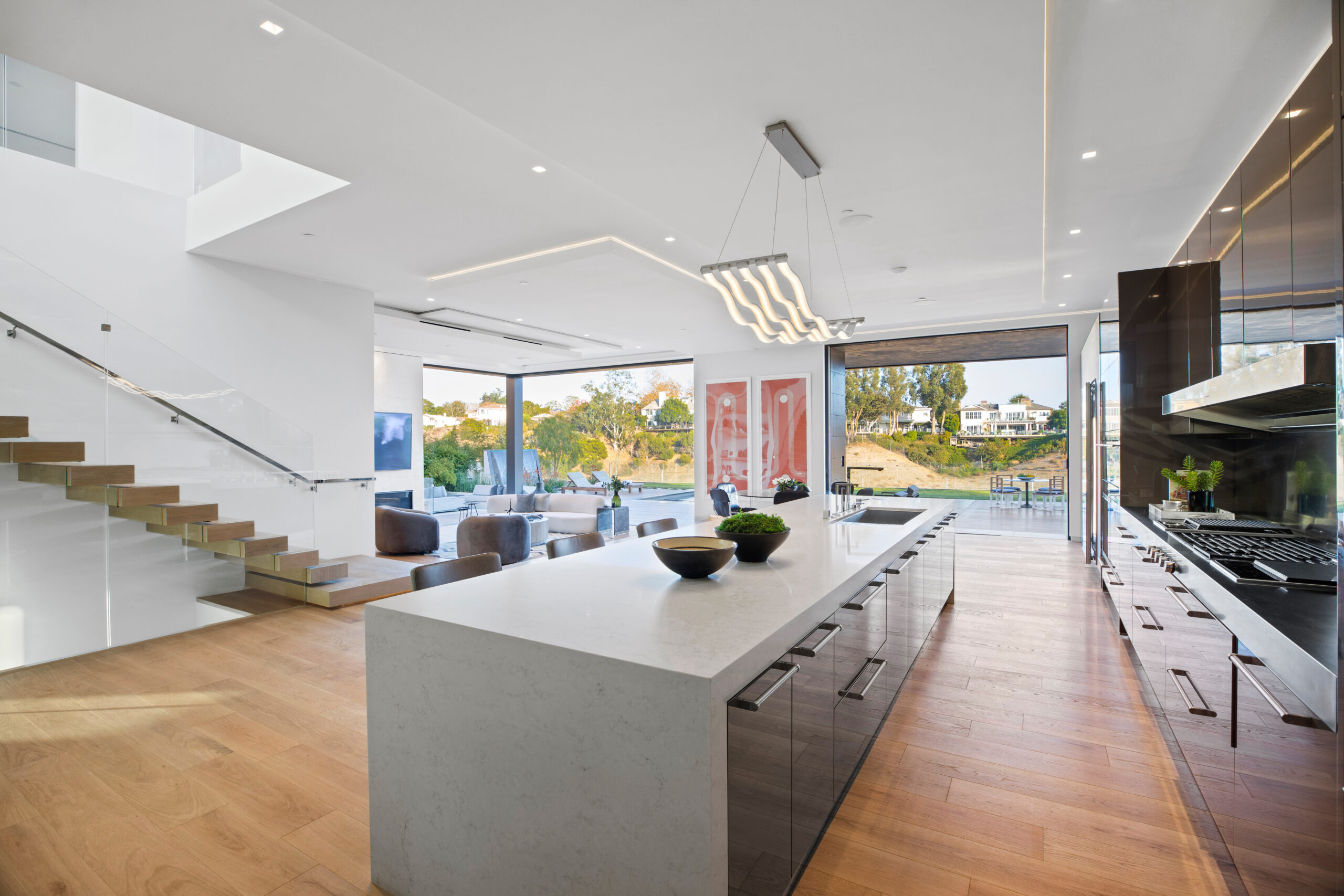
What concealed linear lighting actually is.
Concealed linear lighting is a continuous, even strip of LED light that is hidden inside the architecture. The fixture itself disappears. Only the glow reads. The technology is high-output LED tape mounted inside an aluminum channel with a lens or diffuser; the discipline is choosing the right channel, setting it into the build at the right depth, and protecting the geometry through every other trade.
Done well, the result is the cove that makes the ceiling float, the reveal that defines a clean shadow line, the stair tread that lights its own nosing, the toe kick that makes a kitchen island look like it’s hovering, and the line of light recessed into a millwork shelf. Done poorly, the LEDs show as dots, the channel reads as a visible line, and the detail looks like it was added at the end of the project.
Where concealed linear lighting is used in luxury homes.
Almost every high-end residential project in Los Angeles has at least one concealed linear lighting condition. The most common applications:
- Cove lighting — recessed at the wall-ceiling junction, so the ceiling appears to float.
- Reveal lighting — tucked into a clean gap between two architectural elements (floor and wall, two walls, ceiling and beam).
- Stair tread lighting — recessed under each tread or run as a strip along the side wall of a feature staircase.
- Toe kick and floating cabinet lighting — under kitchen islands, vanities, or floating cabinetry to make them appear to hover.
- Millwork channels — built into custom shelving so books and objects glow softly.
- Linear ceiling features — long, clean lines of light recessed flush into the ceiling for an architectural look.
- Exterior architectural reveals — outdoor soffit lighting, pool coping, integrated patio details.
Why clean lines need a specialist.
Concealed linear lighting is unforgiving because the source disappears and the line itself becomes the finish. A small miss in channel depth, lens selection, wire path, or setback can make the light look uneven, exposed, or hard to service.
The core decisions are practical: channel profile, mounting depth, lens or diffuser type, finish-face setback, blocking, wire path, driver location, dim protocol, and access for service. LIT Group handles those details as a dedicated architectural LED scope.
Coves, reveals, stair treads, toe kicks, and millwork.
Each detail type has its own quirks.
Coves live or die on the ratio between the channel setback and the visible cove depth. Too shallow and the LEDs show; too deep and the wash on the ceiling falls off. Wall-ceiling geometry, finish-face plane, and the channel choice all interact.
Reveals need a sharp, defined shadow line, which means precise framing tolerances and careful trim coordination. Reveals also need the LED depth and finish plane to stay aligned through framing, drywall, and trim.
Stair treads need a wire path that doesn’t fight structure, a thermal strategy that doesn’t bake the LEDs, and an access plan for service. Stair-side runs along the wall need consistent setback and consistent height across the entire run.
Toe kicks get caught between the cabinetmaker and the electrician. The depth has to match the cabinet detail, and the LED needs to bounce off the floor finish without showing the source.
Millwork channels integrate with the cabinetmaker’s shop drawings. The LED scope needs to be clear in the cabinetmaker’s shop drawings so the finished millwork and the lighting system land together.
Channel, lens, and diffusion.
The aluminum channel is the unsung hero of concealed linear lighting. It mounts the LED tape, dissipates heat, holds the lens, and gives the line its visible geometry. We’re not tied to a single product line — we work with whichever architectural linear lighting system the design calls for, and we can incorporate ourselves into a specified product when the project requires it.
What matters is matching the channel to the application: surface-mount where appropriate, recessed where the design intent demands the source disappear, with the right lens for the diffusion the architect wants. The wrong lens turns a clean line into a row of bright dots. The wrong channel depth makes the LEDs visible from sightlines the architect didn’t anticipate.
Installation and field coordination.
The install sequence on concealed linear lighting is its own discipline. Channels go in during framing or before drywall. Wiring is pulled to driver locations during electrical rough-in. After paint and finish are done, our crews come back to install the LED tape, set the drivers, and tune the dim curve with the controls integrator on site.
The reason this is its own scope — and not standard electrical work — is that the detail-grade craftsmanship at the back end of the project is where projects either land cleanly or read like a compromise.