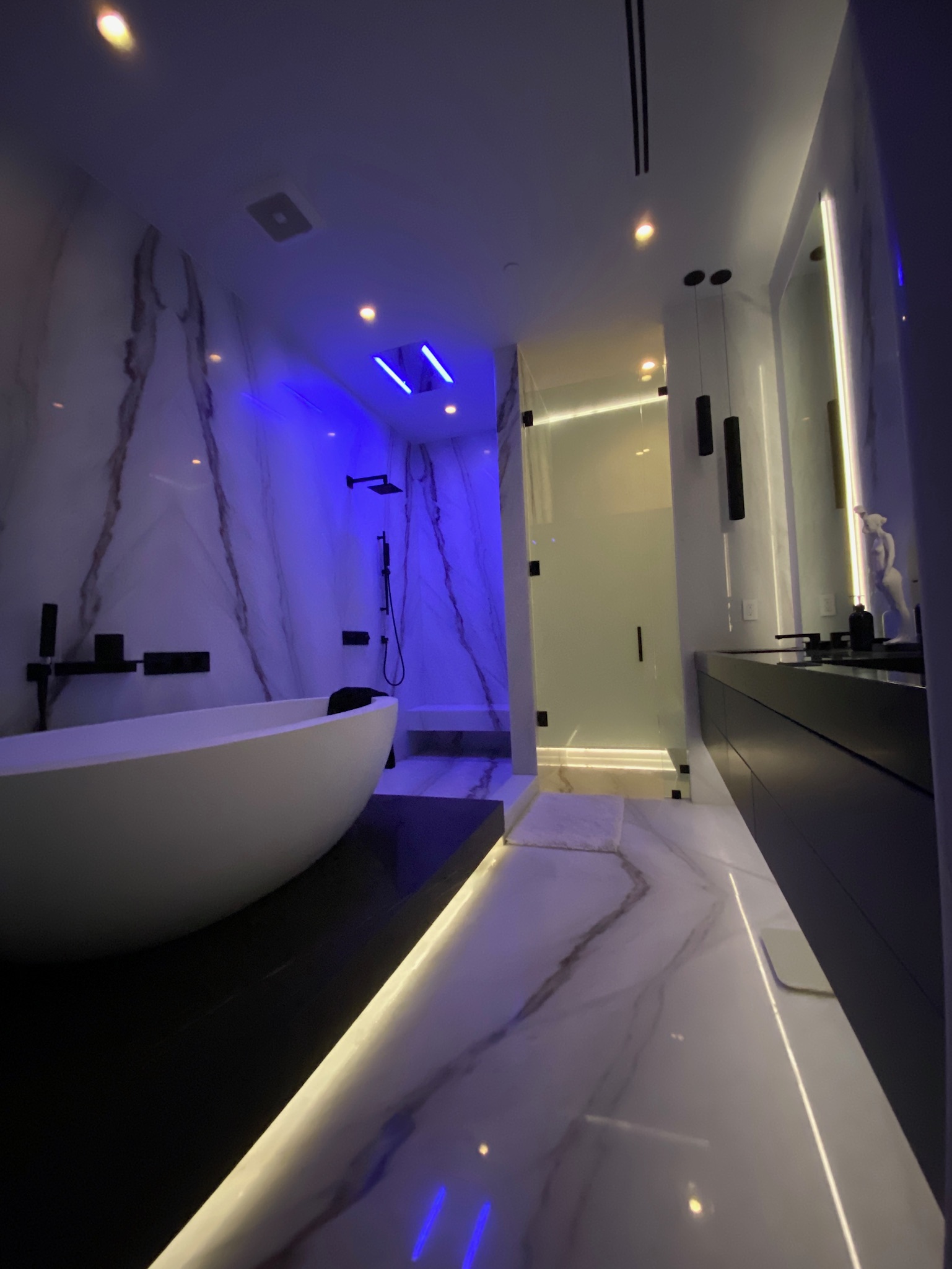
Specialty LED lighting for low-voltage and controls teams.
LIT Group handles the architectural LED side of the controls conversation. We coordinate drivers, dimming protocol, channel counts, zone breaks, service access, and fixture behavior for custom LED assemblies in Los Angeles homes.
The controls contractor keeps the control system. LIT Group owns the specialty LED hardware, assemblies, and field documentation so commissioning is based on known equipment instead of guesswork.
Custom LED assemblies need clean control information.
Backlit stone panels, long linear channels, toe kicks, stair runs, and custom LED assemblies do not behave like standard recessed lighting loads. Driver selection, dimming protocol, voltage drop, channel count, and zone mapping all affect how the final scene performs.
LIT Group documents that side of the scope for the integrator. We coordinate the LED package, confirm driver access, and support tuning so the control system can do its job cleanly.
The LED side, documented for the control room.
We work with Lutron, Crestron, Control4, Savant, and other residential control environments. The goal is not to replace the integrator. The goal is to make the LED hardware predictable before programming and commissioning.
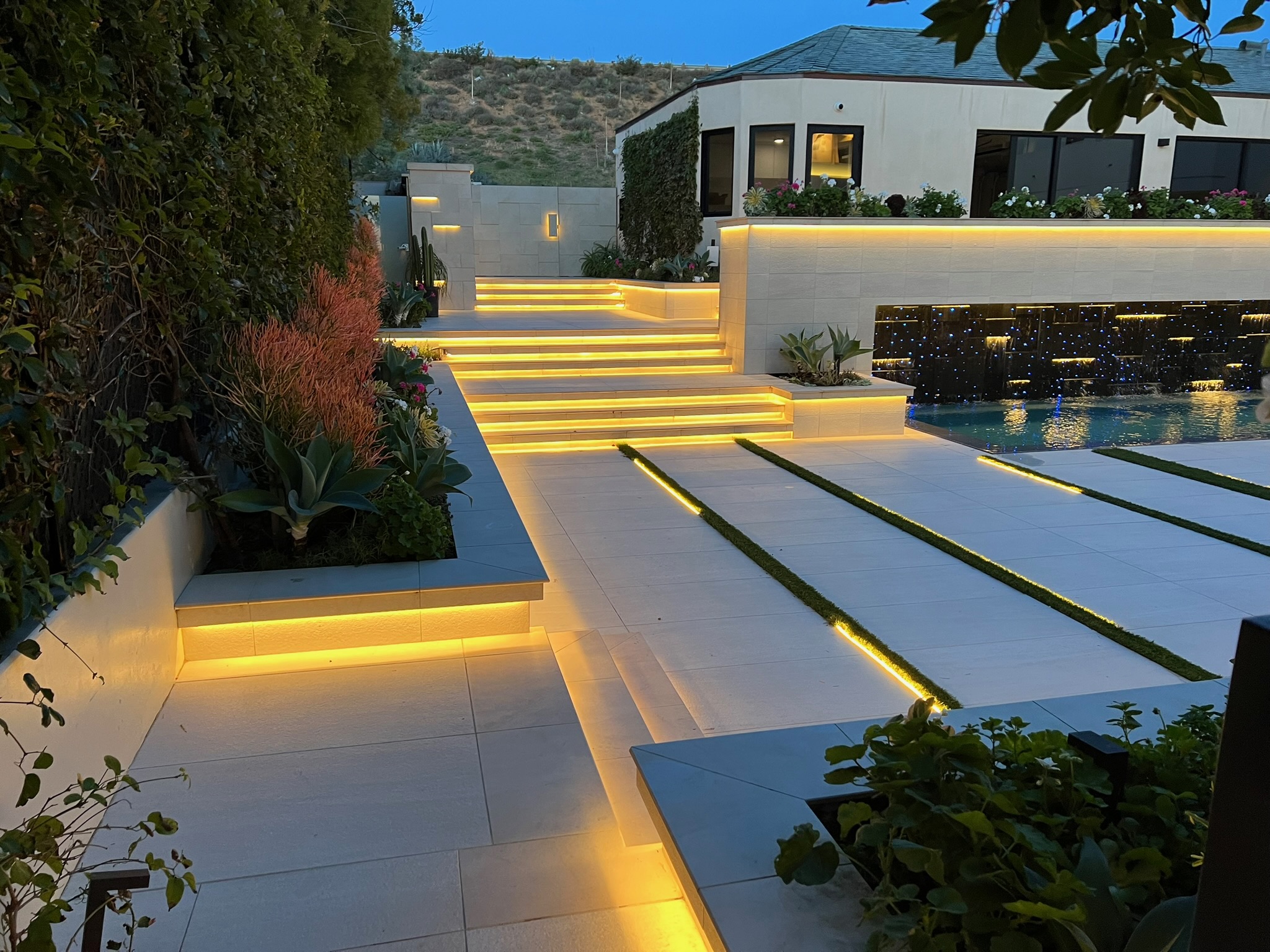
- 01Driver brand, channel count, and dim protocol (0-10V, ELV, DALI, phase) matched to the controls platform.
- 02Channel routing and circuit breakdown aligned with the architect’s zone diagram and the controls programming.
- 03Drive-current trim, dim-to-warm behavior, and low-end clip tuned for the load.
- 04Driver locations, J-box placement, and access panels coordinated against finish geometry.
- 05Low-voltage runs, conduit fills, and shielding walked with the LV crew before drywall.
- 06Documentation handed to the integrator at rough-in — fixture schedule, driver list, zone map.
- 07On-site commissioning support during system tuning and scene programming.
What to send for early alignment.
If we’re aligned before drivers are spec’d, the commissioning pass holds the first time. A first review usually only needs a partial scope and a quick conversation about the controls strategy.
- Control platform and version — Lutron, Crestron, Control4, Savant, or other.
- Dim protocol target — 0-10V, ELV, DALI, phase — per circuit if known.
- Architect’s zone map and scene intent if available.
- Architectural drawings showing specialty LED locations — coves, stairs, backlit stone, custom assemblies.
- Existing fixture schedule and any pre-selected drivers.
- Project schedule with rough-in and commissioning dates.
Low voltage + controls FAQ.
Does LIT Group install the control system?
Which control platforms do you coordinate with?
What does LIT Group hand the integrator at rough-in?
Why does this need to be coordinated before drywall?
Can you support commissioning?
Send control requirements.
Send the control platform, dimming requirements, zone intent, driver preferences, or fixture schedule. We will align the specialty LED scope to the system.